
Industry Insights
How Solar Cell Manufacturing is Driving Stricter Emissions Standards
12 February 2026
Share this article


As global solar cell production scales to meet the world's growing demand for clean energy, manufacturers are facing increasing scrutiny over the environmental impact of the manufacturing process itself. Governments and regulators across Asia, Europe, and the United States are tightening emissions standards, and solar cell manufacturers are being held to higher compliance thresholds than ever before.
The Emissions Profile of Solar Cell Manufacturing
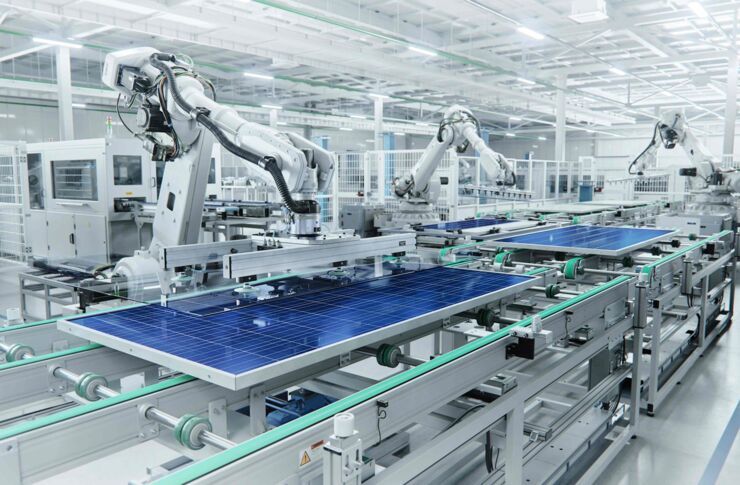
Solar cell manufacturing is not emissions-free. The production of polysilicon, an ultra-pure silicon material at the core of every solar cell, is an energy-intensive process that generates significant greenhouse gas emissions. Thin-film deposition and other upstream processes further contribute hazardous process gases and particulate matter that must be captured and treated at the source.
Among the four supply chain segments in solar PV manufacturing, polysilicon and wafer production are significant contributors to overall emissions. As production volumes grow to meet global renewable energy targets, managing these emissions has become a critical operational and compliance requirement for solar cell manufacturers.
Tightening Regulations Across Key Markets
Regulators are responding. China's Ministry of Industry and Information Technology revised its Photovoltaic Manufacturing Industry Normative Conditions in 2024, outlining stricter requirements for new construction and expansion projects covering energy consumption, resource utilisation, smart and green manufacturing, and environmental protection.
In Europe, carbon footprint standards are also advancing. France introduced carbon footprint requirements that in effect, disqualified most Chinese suppliers from public tenders without government-approved lifecycle emissions assessment certificates. The EU's Carbon Border Adjustment Mechanism, while not yet directly targeting solar equipment, signals a broader regulatory direction toward carbon accountability across manufacturing supply chains.
India as a Growing Manufacturing Hub

India has emerged as a significant new solar cell manufacturing market, backed by substantial government investment and a strategic push to develop domestic production capacity. Annual PV installation forecasts beyond 2030 show increases in India and the North American and Caribbean regions, indicating sustained long-term investment in solar manufacturing infrastructure across these markets. As new facilities come online, environmental compliance including gas abatement, will be a core requirement from day one.
What This Means for Manufacturers
Solar cell manufacturers scaling up production face a dual challenge: meeting output targets while demonstrating measurable progress on emissions reduction. Effective gas abatement at the point of generation is no longer optional. It is a regulatory requirement, a corporate sustainability commitment, and increasingly a prerequisite for market access in key export destinations.
EcoSys's abatement systems are designed to address this challenge, helping solar cell manufacturers capture and neutralise harmful process emissions without compromising production output or efficiency.
Sources
- International Renewable Energy Agency (IRENA)
- China Ministry of Industry and Information Technology (MIIT)
- IEA World Energy Outlook






ECOSYS (MALAYSIA) BERHAD
No. 25, Lorong Beringin 2,
Taman Industri Beringin,
14100 Simpang Ampat,
Pulau Pinang
Ultra High Purity (UHP)
© @ 2026 ECOSYS (MALAYSIA) BERHAD 202301024280 (1518203-H). All Rights Reserved. Powered by Orangesoft Web Design