
Industry Insights
Why India’s Upstream Solar Expansion Demands Advanced Abatement
10 August 2026
Share this article



India's Solar Manufacturing Sector Is Entering A Period Of Significant Expansion
Backed by national policy support, including the Production Linked Incentive (PLI) scheme for high-efficiency solar modules, the country is positioning itself as a serious alternative manufacturing hub within the global solar supply chain.
The part worth noticing is where the growth is happening. India has assembled modules for years using imported cells. The investment now moving into the market extends further upstream, into cell and wafer production, and that is a different kind of manufacturing altogether.
At EcoSys, we build abatement systems for semiconductor and solar manufacturing environments, so this shift upstream is one we watch closely.
Why Cell Production Requires Abatement
Solar cell manufacturing runs on chemistry, and most of it is hazardous. Texturing, etching, doping and coating each use their own mix of chemicals and process gases. Every stage produces waste gas, from acid fumes to hydrogen and fine particulate, and none of it can leave the factory untreated.
The reasons are not solely environmental. Silane gas ignites on contact with air, which makes it a plant safety issue. Acid vapours degrade ductwork and downstream equipment over time. Several of the gases used in cell manufacturing are also regulated greenhouse gases, and manufacturers are required to comply.
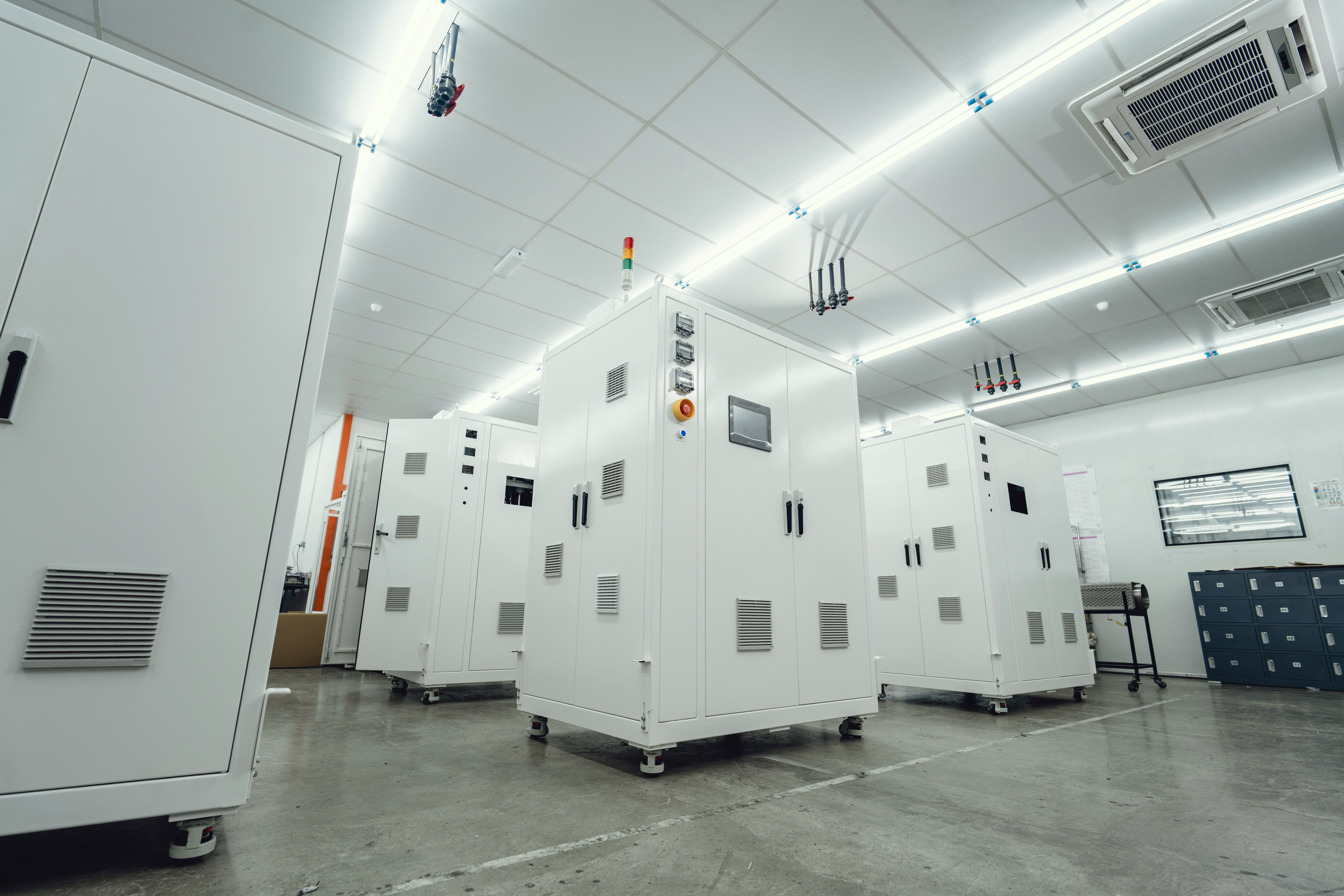
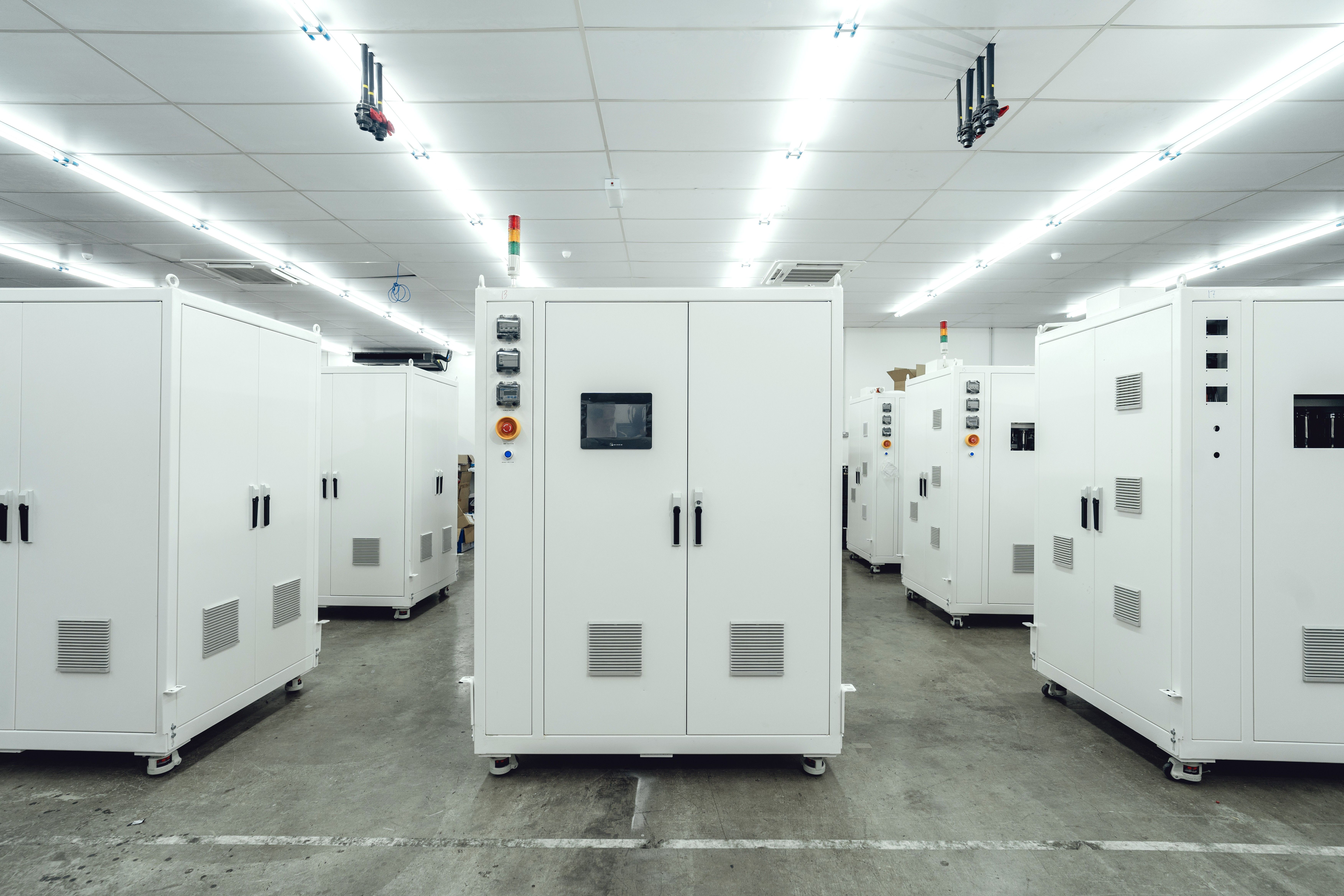 (EcoSys' flagship abatement system designed for waste gas treatment)
This is where abatement systems come in. They sit downstream of the process tool, treating the exhaust before it is released so that what leaves the building meets environmental and safety limits.
Exhaust Volume Rises With Production Volume
A gigawatt-scale line carries a far larger emissions load than a pilot line, and that load must be accounted for during design.
Compliance is no longer the only consideration. As global supply chains place greater emphasis on environmental transparency, manufacturers are increasingly expected to demonstrate how their products are made, not just what they produce.
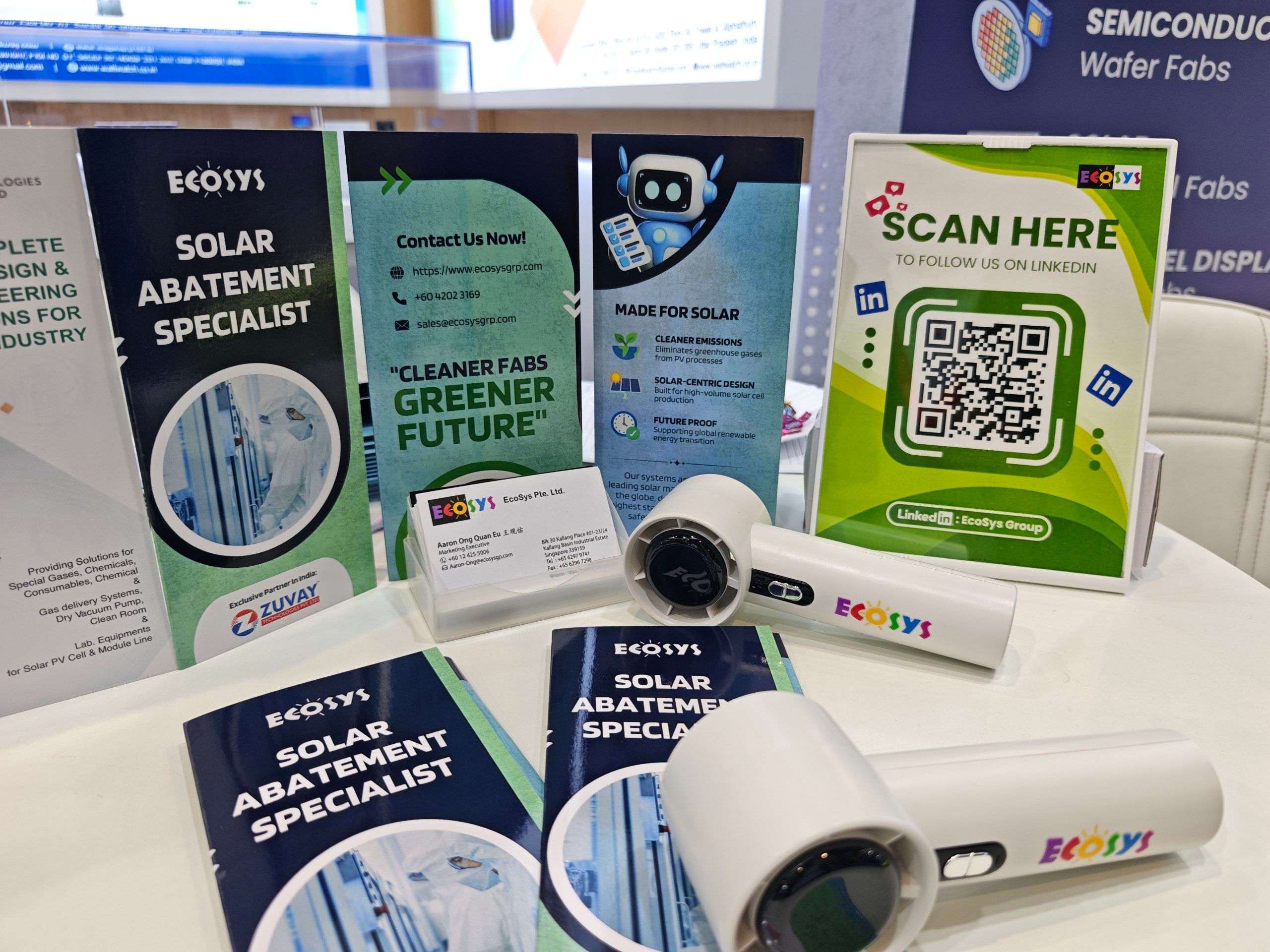 (EcoSys at REI Renewable Energy India)
EcoSys in the Region
Our team has been spending more time with Indian manufacturers, mostly on process design and how the exhaust gets handled as new lines come up.
Solar exists to make energy cleaner, and how it is manufactured should hold to the same standard. The plants going up today will run for decades, and building them to run clean is part of the same goal.
References
• International Energy Agency (IEA). World Energy Investment 2025 – India
• Reuters. India mandates use of locally made solar cells in clean energy projects from June 2026



ECOSYS (MALAYSIA) BERHAD
25, Lorong Beringin 2,
Taman Industri Beringin,
14100 Simpang Ampat,
Pulau Pinang
Ultra High Purity (UHP)
© @ 2026 ECOSYS (MALAYSIA) BERHAD 202301024280 (1518203-H). All Rights Reserved. Powered by Orangesoft Web Design